A slow or delayed roof leak
Insulation can drink up a modest leak during a rain and release the evidence days later, long after the sky cleared. The stain lags the weather, which is exactly what makes this route so misleading.
A brown ring shows up on the ceiling, you check the weather, and it hasn't rained in a week. Before you conclude the roof is innocent, or guilty, it helps to know how water actually gets to a ceiling. There are more routes than the obvious one, and the dry forecast rules out fewer of them than you'd think.

Your house makes moisture all day: cooking, showers, laundry, breathing. That moisture rides on warm indoor air, and warm air rises, finding its way into the attic through every small gap around light fixtures, fans, attic hatches and the tops of walls. Most of the year, nothing comes of it.
The trouble arrives with temperature differences. When that warm, moist air meets a surface cold enough, the moisture condenses out of it, the same physics that fogs a cold glass in summer. In an attic, the cold surfaces are the underside of the roof deck, nail tips and framing on cold nights, or ductwork chilled by air conditioning in the hot months. Condensation forms, drips or soaks into what's below, and eventually a stain blooms on the ceiling with not a cloud in the sky.
That's why a dry-week stain doesn't acquit the roof or convict it. It means the water's route needs finding before anything gets fixed.
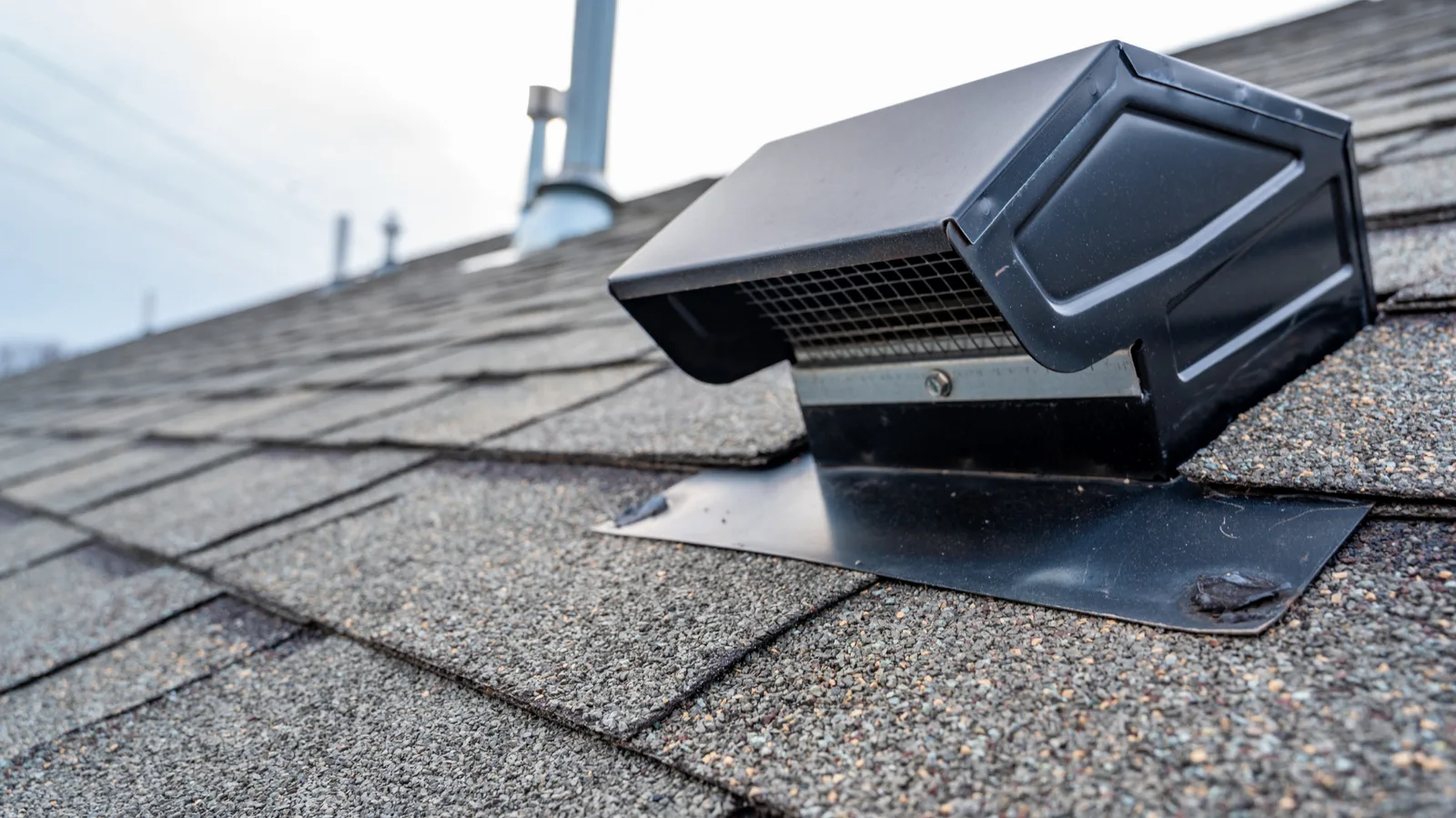
For the condensation route specifically, a vented attic manages moisture with three jobs working together. Air sealing limits how much moist indoor air gets into the attic in the first place. Insulation keeps indoor warmth where it belongs. Ventilation, intake at the eaves and exhaust near the ridge, flushes the attic with outdoor air so what moisture does arrive gets carried off instead of finding a cold surface.
The three cover for each other only up to a point, which is why adding vents alone often disappoints: ventilation can't outrun a big air leak feeding moisture upstairs, and drawing conditioned indoor air into the attic isn't how the system is meant to work. On the roof side, ventilation details are part of what a free roof inspection looks at, alongside checking whether the stain's real source is a leak after all.

You don't have to solve the mystery to ask for help. Tell us where the stain is, roughly when it appeared, and anything you've noticed about when it grows. That's enough to start the tracing.
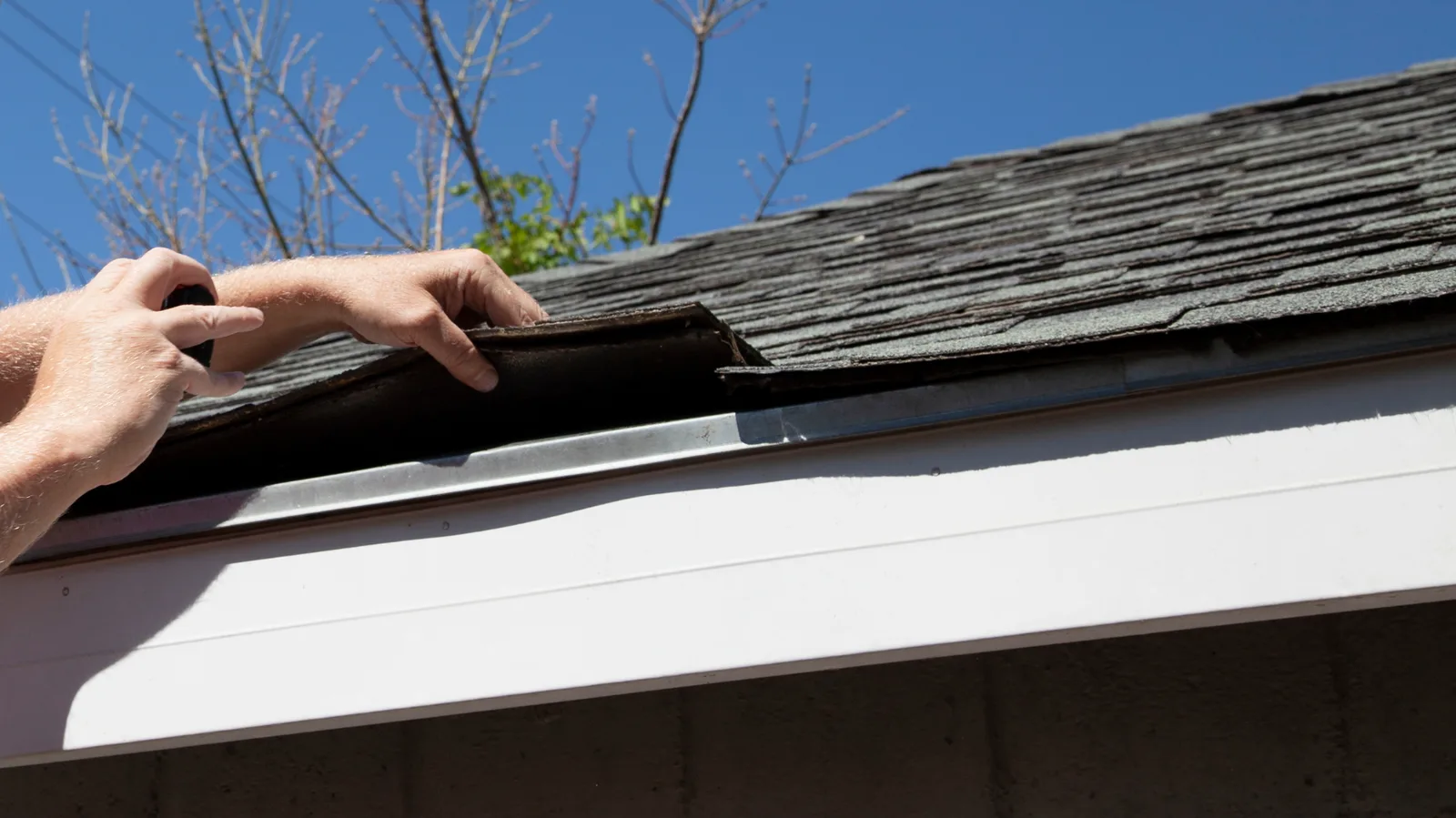
A roofer checks the roof and its details, and tells you what's found.
If the trail does lead to the roof, this is how the entry point gets closed.
Yes. Condensed moisture dripping from cold surfaces or soaking through insulation stains a ceiling just like leaked rain does; the ring on the drywall doesn't record where the water came from. That's why the source needs actual investigation rather than a verdict based on the stain's looks.
No. Ventilation is one leg of a three-legged system with air sealing and insulation, and if the real problem is moist indoor air pouring through attic bypasses, or a duct sweating in a hot attic, more roof vents won't fix it. Sometimes added ventilation is exactly right; the point is to diagnose first, so the fix matches the actual mechanism.
A ceiling stain with no rain behind it deserves an answer, not a shrug. A free roof inspection rules the roof in or out properly, and if it turns out to be innocent, you'll hear that too. Tell us about the stain and let the tracing start.
Contact us about the stain