Single-ply membrane covering a commercial flat roof with air handling units

TPO Roofing in Pryor, OK

TPO has become the default answer for a lot of low-slope roofs, and often it's a good one: a single-ply membrane with heat-welded seams that, done properly, behave like one continuous sheet. Whether it's the right answer for your building depends on the assembly underneath it and the quality of the details, which is where this page spends its time.

Talk through a TPO project

The building, its current roof and what you're weighing: repair, recover or new. Start there.

TPO is one part of the roof assembly

A TPO roof isn't a sheet of white plastic; it's a stack. Insulation over the deck sets the roof's thermal performance and its slope-to-drain. An attachment method, mechanically fastened, adhered or ballasted, holds the assembly against wind. The membrane goes over that, and then the details, the flashings at every edge, curb and penetration, finish the system. Most of what separates a good TPO roof from a mediocre one is decided below and around the membrane, not by the membrane brand.

Worth saying plainly: white and smooth doesn't mean TPO. PVC and coated roofs read the same from a distance, and they take different repair materials. Any real proposal starts by confirming what's actually on the roof.
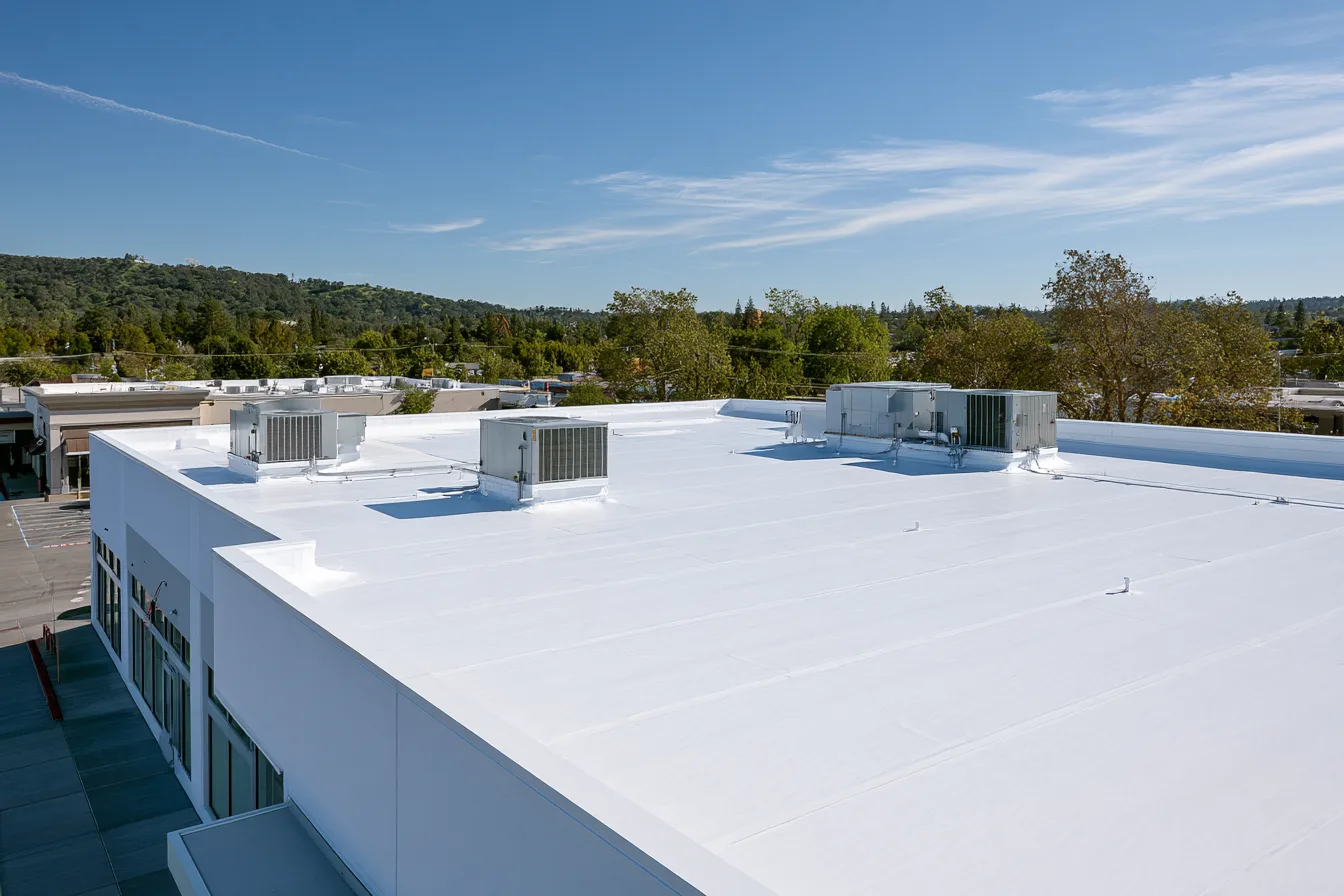
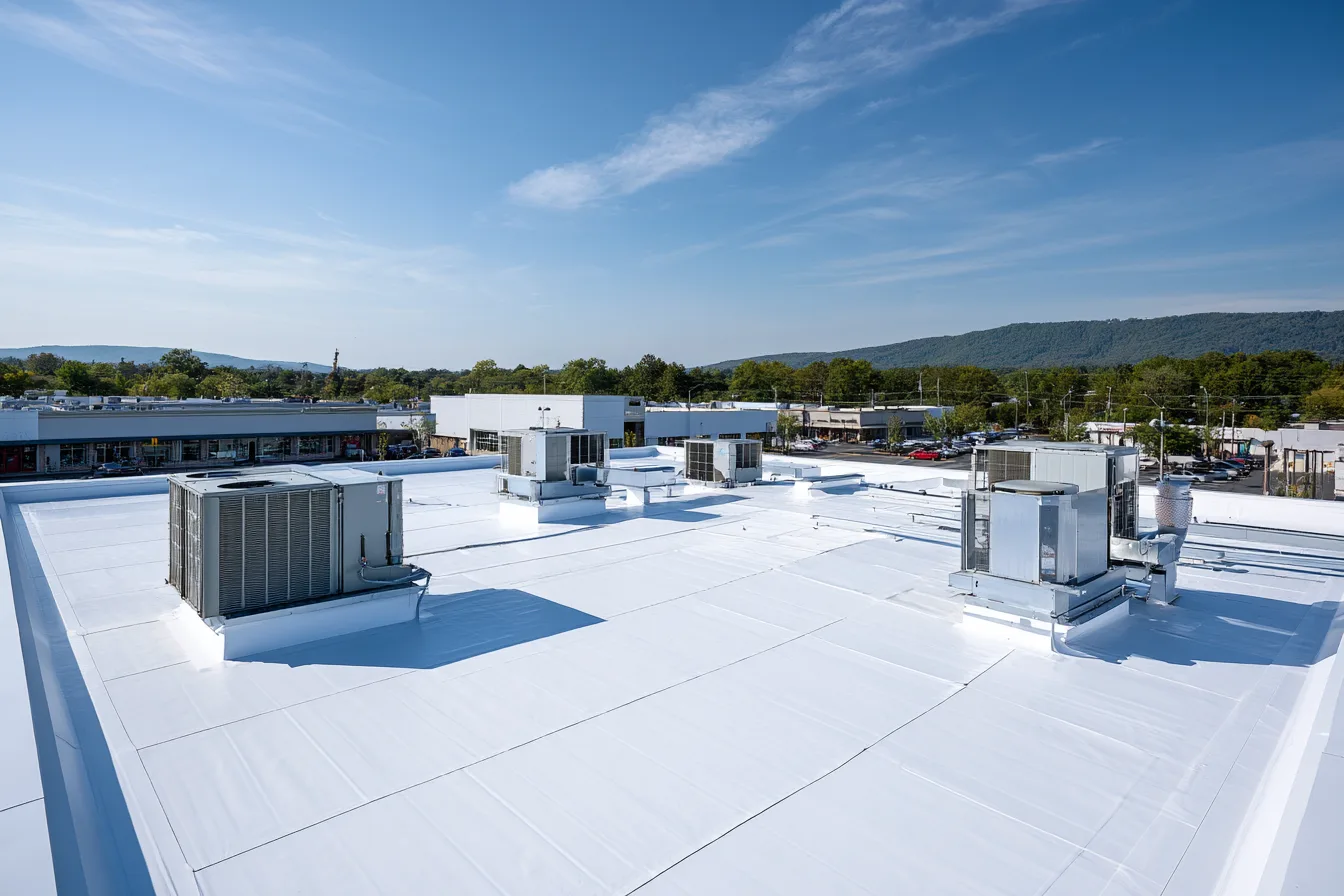
Commercial flat roof covered by single-ply membrane with air handling units

Seams, penetrations and edge attachment

TPO's signature strength is the heat-welded seam: membrane fused to membrane, not glued. That strength has conditions attached.

Welds need clean, sound material

A proper weld requires prepared surfaces and membrane that's still weldable. Dirt, weathering and age all degrade weld quality, which is why seam work on an older roof starts with testing how the material takes a weld, not with assuming it will.

Details finish the system

Every pipe, curb, drain and corner gets its own formed flashing. These details are where installation quality shows, and where inspections concentrate later, because a perfect field with rushed details still leaks.

Edges carry the wind load

The perimeter is where wind works hardest on a single-ply roof. Edge metal and termination details sized and fastened for the building, not generically, are what keep a storm from finding a starting point.

Request a free roof inspection

Repair, recover or a new assembly

An aging TPO roof, or a building considering TPO, has three real paths. Moisture and substrate condition pick among them.

Repair what's there

Local defects on a membrane that's still weldable and dry underneath get welded patches and renewed details. The system keeps its remaining life at the lowest cost.

Recover over it

A new membrane installed over the existing roof, feasible when the old assembly is dry, the substrate suitable and the drainage workable. It saves tear-off cost and disruption, but it's earned by a moisture survey, not assumed; recovering wet insulation locks the problem into the new roof.

Tear off and rebuild

When moisture is widespread or the assembly has failed, the right path is down to the deck and up again, with insulation and slope corrected along the way. It's the biggest number, and on a failed assembly it's the one that actually ends the spending. If an existing membrane is sound but weathered, there's also a fourth conversation worth having: restoration with a coating.

Planning a TPO project

Single-ply membrane covering a commercial flat roof with air handling units
  1. Assess the assembly

    Confirm the existing system, survey for moisture, and check how the membrane and substrate have actually held up.

  2. Design the stack

    Insulation, slope-to-drain and attachment method chosen for the building and its wind exposure, with drainage problems corrected on paper before they're corrected on the roof.

  3. Detail and verify

    Flashings, edges and penetrations executed to the system's requirements, with seams checked as the work closes out.

Commercial roofing questions

Can TPO seams be repaired?

Usually, if the membrane still takes a weld. Seam repairs on TPO are welded, not caulked, and their quality depends on the material's condition and the preparation, so an assessment tests weldability rather than assuming it from the roof's age in either direction. The flat roof repair page covers how seam leaks get traced in the first place.

Can an older TPO roof be coated?

Some qualify. Aged TPO can accept restoration coatings, but only after a moisture survey, adhesion testing and full preparation, including replacing any wet materials first. Product systems for aged TPO make those checks explicit requirements, not suggestions. The roof coatings page walks through qualification.

Will a white roof cut my energy bill by a fixed percentage?

No fixed number is honest. A reflective roof reduces the heat the building absorbs in summer, and what that's worth depends on your climate, insulation, equipment and how the building runs. What you can act on is the assembly design: the insulation layer is the part of the energy story you actually control.

Arrange a look at the building's roof

Repair, recover or rebuild is a decision worth making on evidence. A free assessment establishes what's on your roof, where the moisture is, and which of the three paths your building has actually earned.

Contact us
White flat roof membrane with rooftop HVAC units under clear sky

Talk through a TPO project

The building, its current roof and what you're weighing: repair, recover or new. Start there.

Call (918) 803-0637Request roofing help