Close-up of a paint roller applying white coating to a roof surface

Roof Coatings in Pryor, OK

On the right roof, a coating is one of the best values in commercial roofing; on the wrong roof, it's an expensive way to hide a problem while it grows. The difference is qualification: a coating restores a roof that's sound and dry underneath, and no sales pitch can make that true of a roof that isn't. This page explains how to tell which roof you have.

Find out if your roof qualifies

The building, the roof's age if you know it, and what it's been doing. The assessment answers the coating question either way.

What makes a roof suitable for coating

Restoration is earned, not assumed. Three checks decide it, and each one happens before any number gets attached.

Dry underneath

A moisture survey has to confirm the insulation and assembly are dry. Coating over wet materials seals the moisture in under a fresh surface, where it keeps working on the roof from below. Wet areas don't disqualify the whole roof, but they come out and get rebuilt before anything gets coated.

Sound and compatible substrate

The existing membrane or surface has to be structurally serviceable and chemically compatible with the coating system, with adhesion proven by testing on the actual roof rather than assumed from a product sheet.

Workable drainage

Coatings and standing water are a poor marriage; ponding areas stress most coating systems beyond their warranty conditions. A roof with real drainage problems gets those corrected first, or steered toward different work entirely. The flat roof repair page covers how drainage problems get sorted from leaks.

Request a free roof inspection

Preparation does the work beneath the coating

On a coating project, the coating is the last and simplest step. Before it: the roof gets cleaned to bare, sound surface, because coatings bond to the roof, not to the dirt on it. Wet insulation found in the survey comes out and gets replaced. Defects get repaired with materials compatible with the existing system. Where the coating system requires it, a primer goes down so the topcoat has something to grip.

That sequence is most of what a coating project costs and most of what it delivers: the same product over skipped preparation is a different job with a much shorter life. It's why the preparation gets spelled out in the scope here, so the price reads as work, not just as a number.
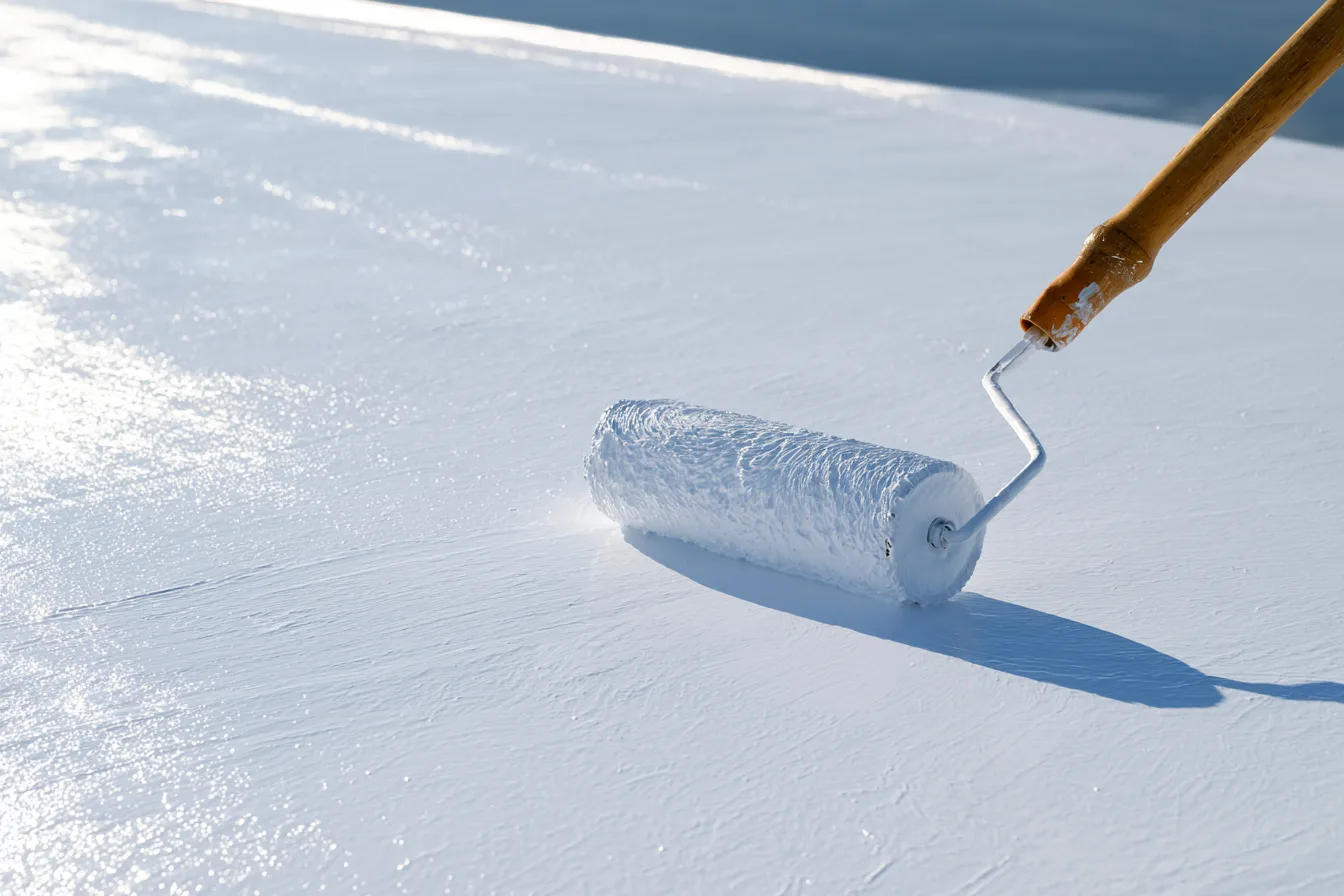
Close-up of a paint roller applying white coating to a roof surface

Seams, edges and penetrations need their own detail

Rolling coating across the field is not restoration. The places a roof actually leaks get individual treatment first.

Seams and repairs

Existing seams and any repaired defects typically get reinforced detail treatment, often with fabric or heavier application, before the field coat ties everything together.

Penetrations and curbs

Every pipe, drain, curb and unit flashing is a three-dimensional detail that a roller can't do justice. Each gets worked individually to the coating system's requirements.

Edges and terminations

Where the coating stops, it has to terminate cleanly and stay bonded, or the weather starts peeling at the boundary. Perimeter detail is part of the scope, not an area to feather out and hope.

Restoration cost depends on the starting roof

The roof's condition writes most of a restoration invoice, which is why a per-foot price quoted sight unseen means so little: how much cleaning and preparation the surface needs, how much wet material has to come out and be rebuilt, how many repairs precede the coating, how dense the details are, and which coating system fits the substrate.

The comparison that matters is against the alternatives for your actual roof, the repair and replacement paths laid out on the commercial roofing hub. A roof that doesn't qualify wastes the coating money and still needs the bigger job later, which is exactly what the assessment is there to catch before any number gets attached.

Commercial roofing questions

Can coating go over wet insulation?

No. Wet materials have to come out and be replaced before a restoration system goes on; coating over them seals moisture into the assembly, where it degrades insulation and deck while the surface looks freshly done. This is exactly what the pre-coating moisture survey exists to catch. If a roof has active leaks, they get found and repaired first, which is flat roof repair work.

Is a roof coating the same as replacing the roof?

No. Restoration keeps your existing assembly and renews its surface; replacement builds a new assembly. A coated roof still carries its original insulation, slope and history, which is why coating is only offered to roofs whose underlying assembly deserves keeping. When it doesn't, the right recommendation is the one on the commercial roofing hub: repair, restore or replace, chosen by condition.

Does every coating work on every roof?

No. Coating chemistries bond differently to different substrates, and each product system carries its own preparation, primer and application requirements. Silicone, acrylic and urethane systems each have roofs they suit and roofs they don't, and the match is proven by adhesion testing on your roof, not picked off a shelf. Aged TPO is a working example: the TPO roofing page covers when that membrane can accept a restoration coating and what has to be checked first.

Arrange a look at the building's roof

Before you accept or reject a coating quote, find out whether your roof qualifies. The assessment is free, and either answer is worth having: a restoration that will actually hold, or the bigger conversation caught early.

Contact us
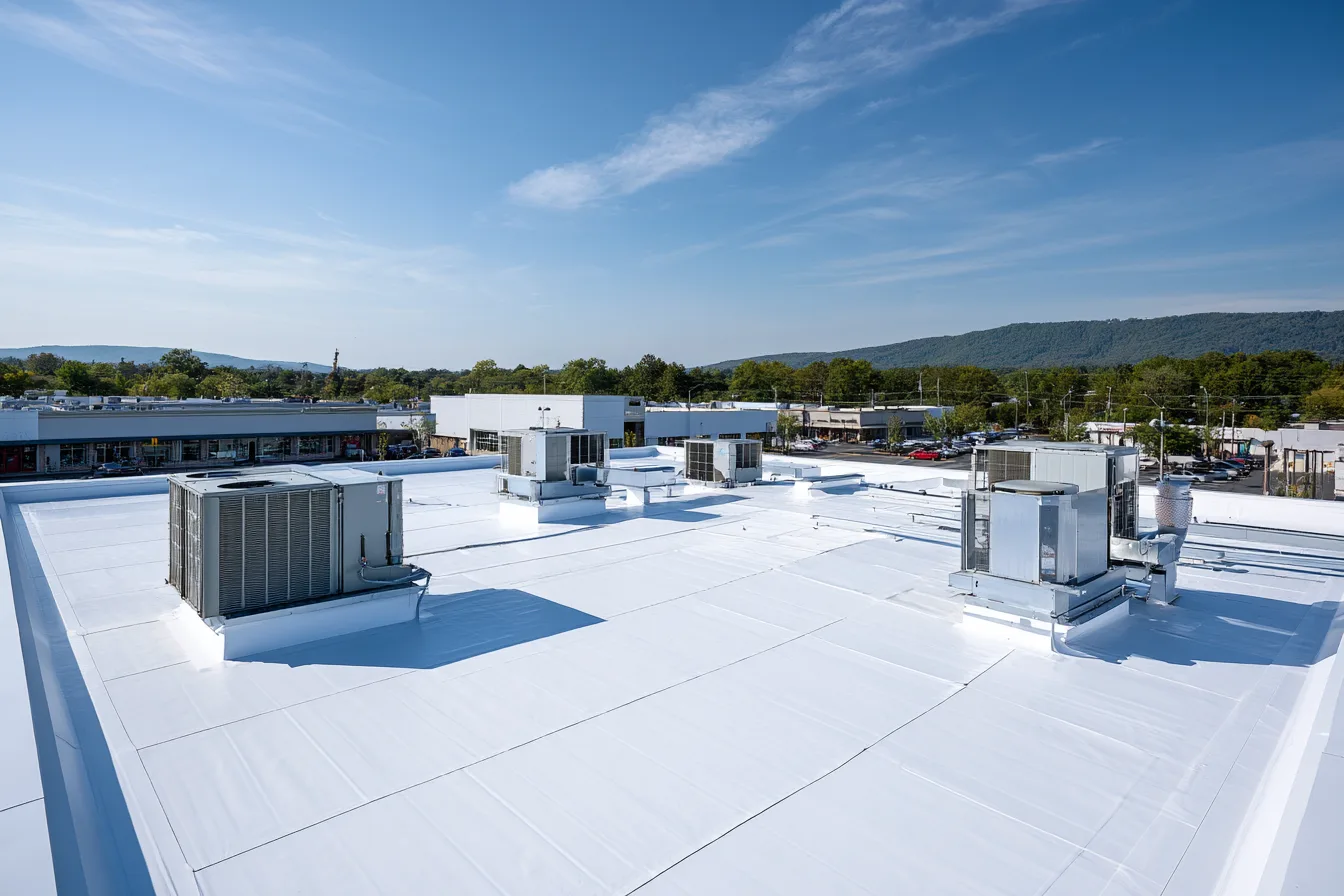
White flat roof membrane with rooftop HVAC units under clear sky

Find out if your roof qualifies

The building, the roof's age if you know it, and what it's been doing. The assessment answers the coating question either way.

Call (918) 803-0637Request roofing help