Blocked outlets
Debris at drains and scuppers is the cheapest drainage problem to have. Clearing them restores the design's intent, and a maintenance habit keeps it that way.
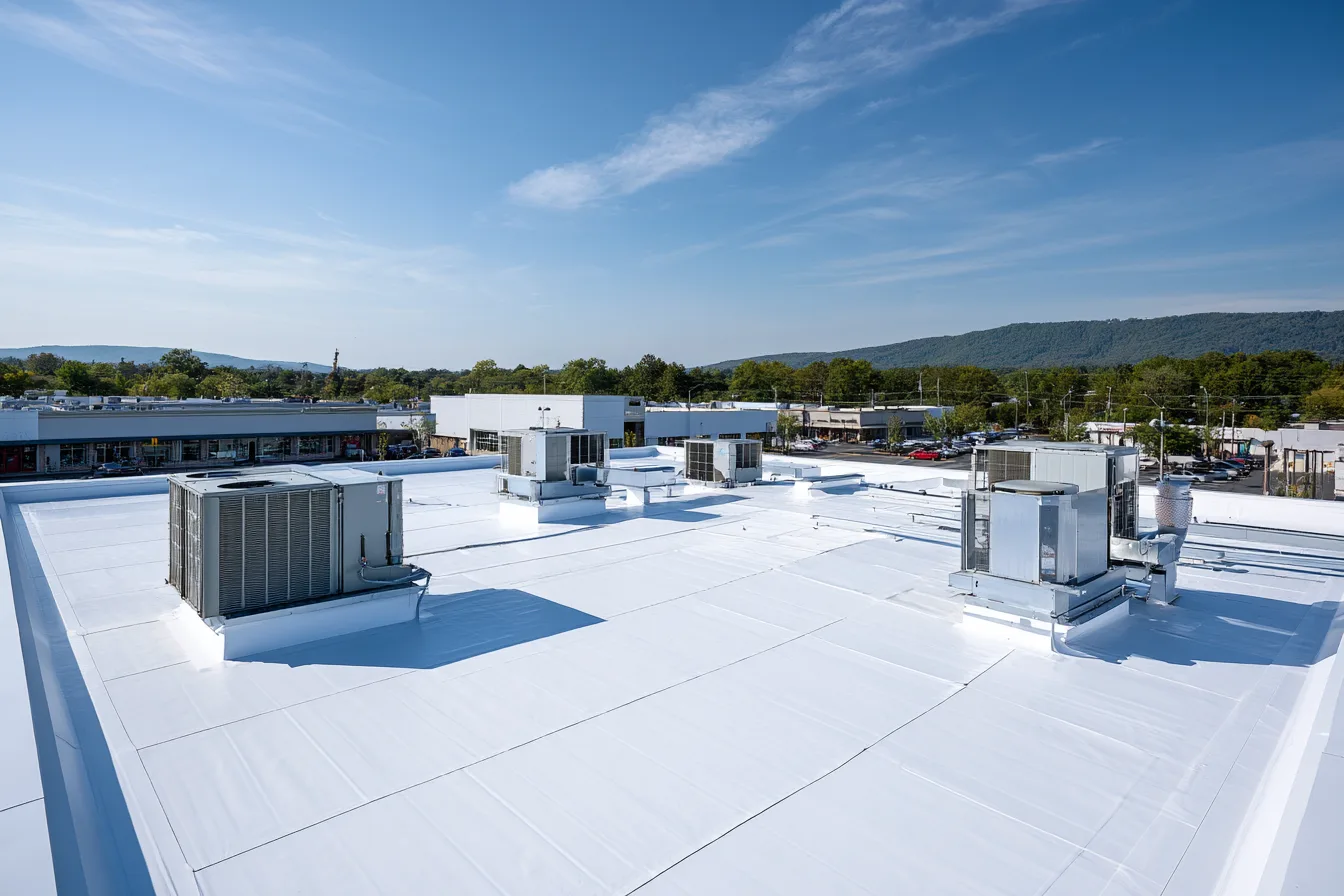
A leak in a low-slope roof rarely announces its address. Water gets in at one defect, travels under the surface, and shows up over whatever part of your operation can least afford it. Fixing it for good means finding the actual entry point, checking what the water soaked on the way, and matching the repair to the membrane that's really up there.
On a membrane roof, the defect and the drip are usually different places. Water entering at an opened seam, a failed penetration boot, a parted perimeter flashing or a deteriorated drain connection moves laterally through or under the insulation before it finds a path through the deck. The stain on the ceiling tile marks the exit, not the entrance.
That's why a useful repair visit starts with the interruptions, the seams, penetrations, curbs, edges and drains uphill of the evidence, and why it has to identify the membrane before touching it. TPO, PVC, EPDM and modified bitumen each take their own compatible repair materials, and the wrong patch on the wrong membrane can fail faster than the defect it covered.
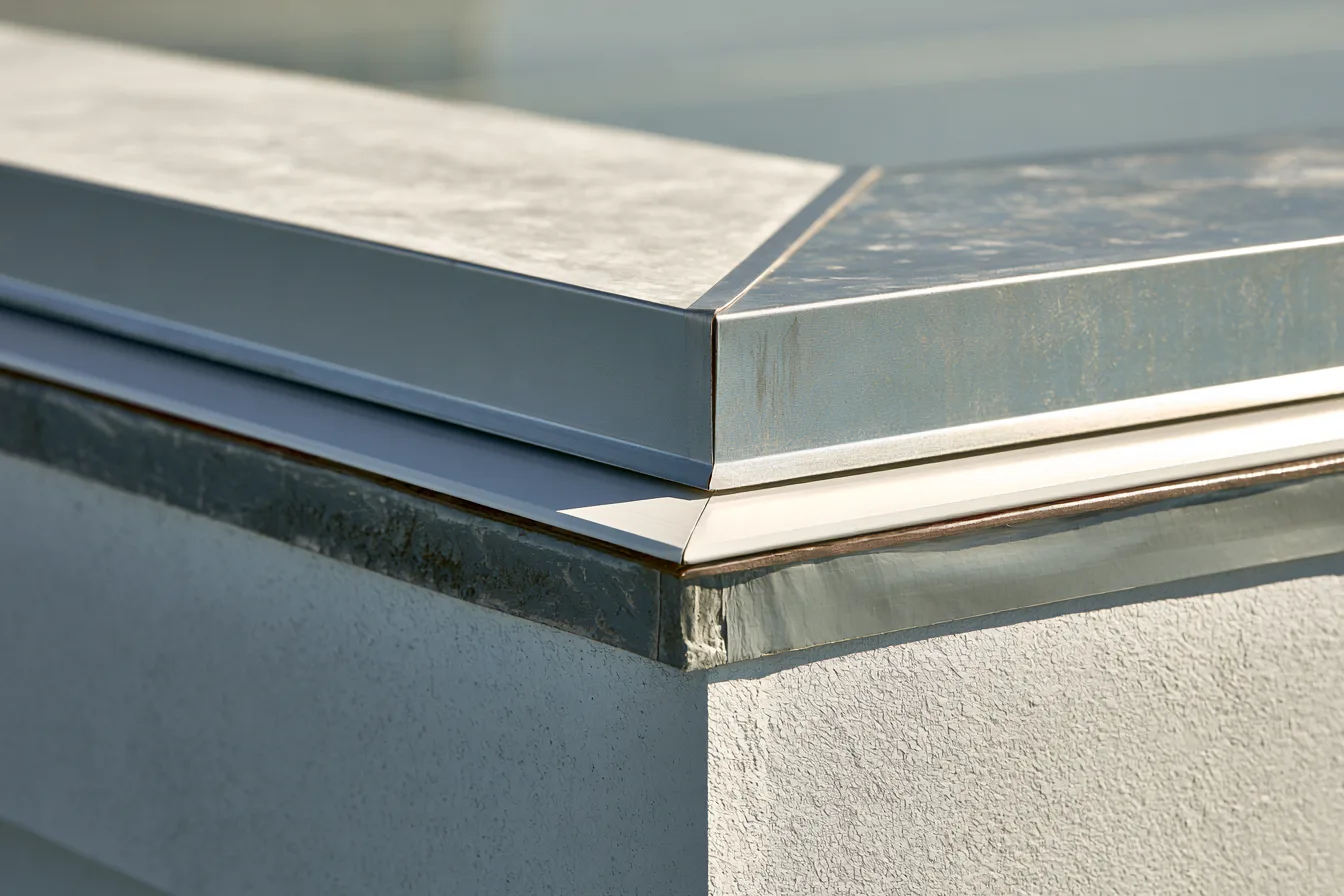
Standing water and leaking are different problems that get conflated constantly. A repair can be perfect and the roof can still pond; drainage can be fine and the roof can still leak. Sorting which problem you have, or whether you have both, is part of the assessment.
Debris at drains and scuppers is the cheapest drainage problem to have. Clearing them restores the design's intent, and a maintenance habit keeps it that way.
Insulation that has crushed or settled in one area creates a birdbath that outlasts every rain. Whether it matters depends on how long water sits and what the membrane manufacturer tolerates; localized fills or tapered insulation can correct it during other work.
When ponding is widespread, the roof's original slope or drain placement may simply be inadequate. A patch won't change that; correcting it is a design conversation that belongs in any restoration or replacement planning, which is one reason ponding history matters when weighing those options.
Confirm the actual membrane and assembly, since everything about the repair follows from it.
Find the entry point uphill of the evidence and establish how far moisture has traveled in the insulation, which can take dedicated moisture testing beyond the first walk, because scope follows the wet, not just the hole.
A compatible repair for the confirmed defect and any drainage correction it exposed, or a straight recommendation for wider work if that's what the roof showed.
No, because those are different jobs. A patch closes an entry point; ponding is a slope or drainage condition, corrected by clearing outlets, adjusting insulation or rethinking where water is supposed to go. If ponding is part of your roof's story, it belongs in any restoration decision too, which the roof coatings page covers.
No. It means evaluation: how long water sits, where, what the assembly underneath shows, and what the membrane's manufacturer tolerates. Some ponding gets corrected with drainage fixes during ordinary work; some is the visible edge of a roof that's failing. The difference is a finding, and the commercial hub explains how the repair-restore-replace decision gets made.
No. Repair materials have to be compatible with the membrane's chemistry and, for welded systems, with how it joins. A patch that won't bond, or that attacks the membrane it's on, fails early and complicates the proper repair later. Identifying the system first isn't fussiness; it's the repair. The TPO page shows how that plays out on one common system.
A leak on a working building doesn't schedule itself politely. Send the location and what the roof is doing, and get the entry point traced and a repair scoped to what's actually wrong; if pinning down concealed moisture takes a dedicated survey, that gets scoped as its own step instead of guessed at.
Contact us