White ranch house with gray asphalt shingle roof and black shutters

Roof Leak Repair in Pryor, OK

Water inside the house has everyone's attention, and the first instinct is to look straight up from the stain. The roof rarely cooperates; water travels before it shows itself. Leak repair is really two jobs: finding where the water actually gets in, then closing that path for good. Both are the roofer's job, and the trip out to find it is free.

Tell us about the leak

The room, roughly when it started, and whether it comes with every rain if you happen to know. That's plenty.

The ceiling stain and the entry point

Water that gets past the covering lands on the underlayment or the decking and then follows gravity along whatever it finds: down a rafter, along a panel seam, across the top of the insulation. By the time it soaks through a ceiling, it can be several feet from where it entered, which is why patching the roof directly above a stain so often fixes nothing.

Tracing the leak means working backward up that path. On the roof, that's a matter of following the slope uphill from the wet evidence and checking every detail the water could have started from along the way. The stain tells you where the water ended up; the roof tells you where it began.

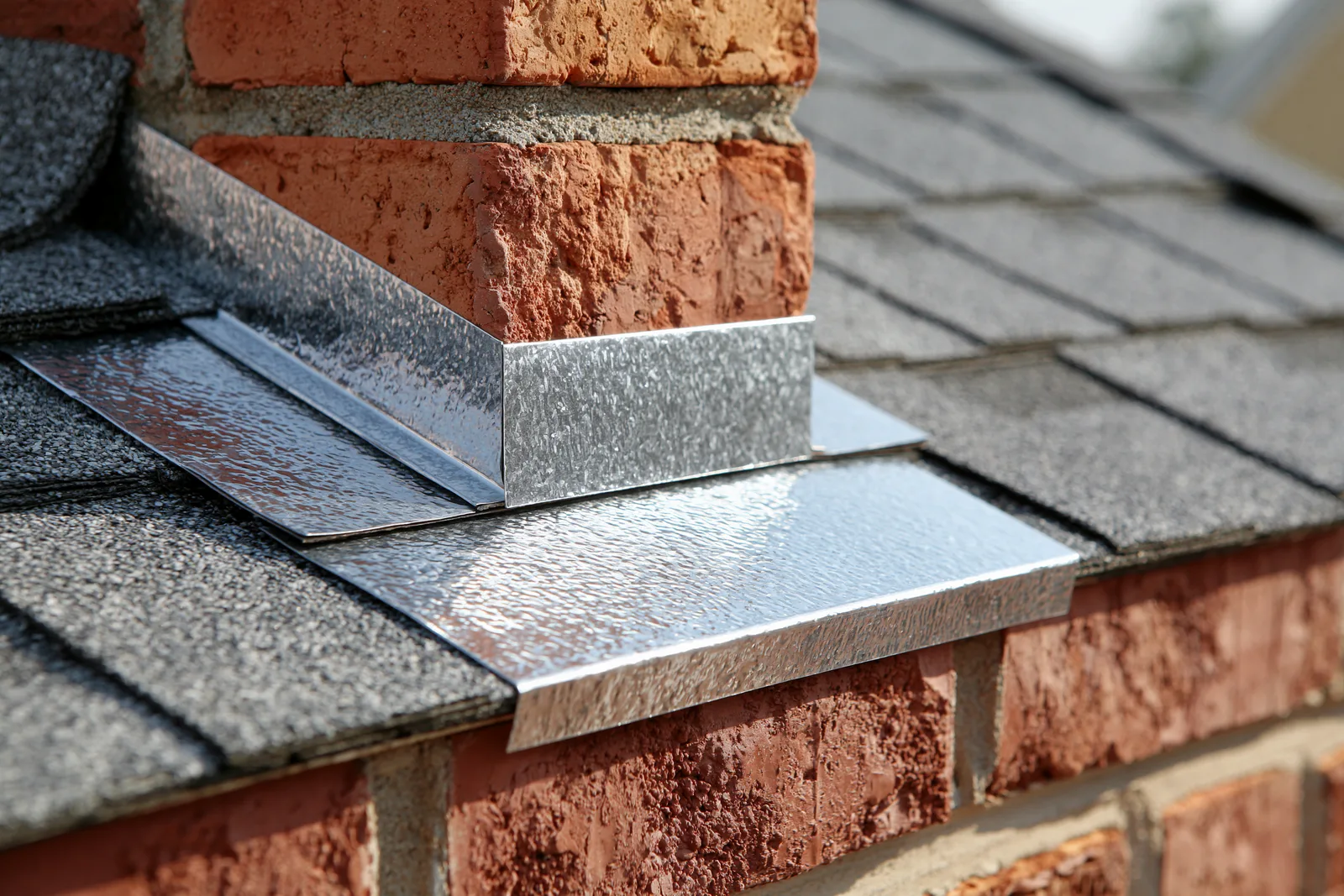
Metal saddle flashing wrapped around a brick chimney base on a shingle roof

Flashing, penetrations and roof transitions

Leaks concentrate where the roof plane gets interrupted, because every interruption depends on a detail to keep shedding water. These are the usual suspects a trace checks.

Pipe boots

A plumbing vent is sealed by a flexible boot, and that gasket weathers on a different clock than the shingle field: sun exposure hardens and cracks the rubber while the roofing around it still has life. A cracked boot gives rain a route along the pipe into the house, so the evidence tends to show up wherever the plumbing runs. The fix, a new boot, is a small and quick repair.

Chimney and wall flashing

Where the roof meets brick or siding, layered metal carries water past the joint. Flashing that has pulled away, rusted through or been buried in old sealant can let runoff slip behind the metal and reach the roof deck. The lasting fix renews the flashing; another bead of caulk over it is a countdown timer.

Valleys and transitions

Where two slopes meet, or where a roof changes pitch, water concentrates and moves fast. Damage here admits more water than the same damage anywhere else, and repairs must rebuild the layered path, not just cover it. This is roof repair work once the entry point is confirmed.

Skylight and vent perimeters

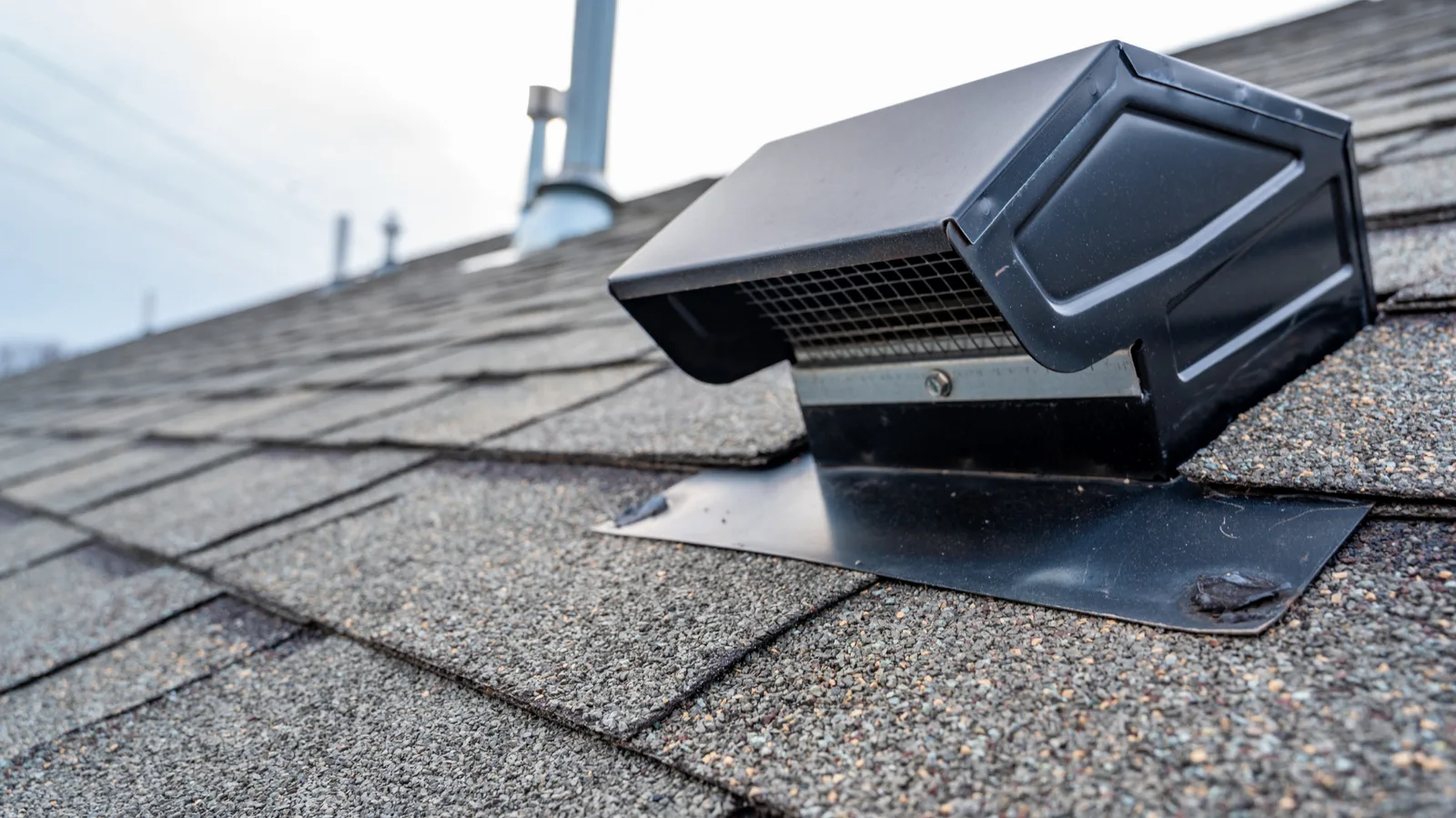
Anything mounted through the roof, from a skylight to a simple vent cap, has a perimeter that was flashed once and has weathered ever since. The trace checks each one uphill of the evidence.

Request a free roof inspection

What to do while water is coming in

Until the roof can be looked at, the goal is protecting the house and yourself, in that order of simplicity.

Catch and contain

A bucket under the drip, towels for the spread, and furniture moved out from under it. If a ceiling is sagging or bulging with held water, keep people and pets out of that room entirely; a ceiling holding water can give way without warning, and it isn't something to poke at or work beneath.

Mind the electrical

Water near light fixtures, ceiling fans or outlets is a stop sign: leave them switched off and untouched, and mention them when you send the request so the water's path near the wiring gets attention too.

Stay off the roof

A wet roof is dangerously slick even for people who work on them daily, and there's nothing up there worth a fall. Note what you can from the ground and leave the climbing to the inspection.

When water appears without rain

A stain that shows up during a dry week doesn't clear the roof, but it does widen the suspect list. Condensation can form when warm indoor air reaches cold surfaces in the attic and leaves its own staining. Plumbing supply and drain lines run through ceilings, and HVAC condensate has its own ways of escaping. Slow roof leaks can also bank water in insulation during one rain and release the evidence days later.

Sorting those out is investigation work, not guesswork, and not yours to do. Describe what you're seeing and let the inspection narrow the source; if it turns out not to be the roof, you'll be told so straight out. There's more on the condensation case in our article on ceiling stains without rain.

Black roof vent cap mounted on shingles with metal flashing

Questions about roof leak repair

Can a roof leak show up far from the damaged shingles?

Yes, easily. Water runs along underlayment, decking seams and framing before it soaks through anywhere visible, so the stain can mark the end of the water's trip rather than the start. That's why the useful fix begins with tracing the entry point on the roof instead of cutting into the ceiling under the evidence. Closing a confirmed entry point is standard roof repair work, scoped to the detail that failed.

Does a leak always mean I need a replacement?

No. A leak is often a failed detail, a split boot or tired flashing, on a roof with plenty of life left, and a repair can address that isolated failure without replacing the whole roof. Replacement enters the conversation when the leak is one symptom of a covering that's worn out broadly. The repair-or-replace guide explains how to tell which situation you're in.

Why is there a ceiling stain when it has not rained?

Because water has more than one way to reach a ceiling: condensation on cold attic surfaces, a plumbing or HVAC issue, or a slow roof leak whose evidence lagged the weather. A dry forecast rules out nothing by itself; the source needs finding. This article walks through the possibilities.

Start with a free roof inspection

Every day a leak runs, it works on wood and insulation you can't see. Send the location and what you've noticed, and get the entry point found before it gets more expensive.

Contact us
Gray asphalt shingle roof and black shutters on a white ranch house

Tell us about the leak

The room, roughly when it started, and whether it comes with every rain if you happen to know. That's plenty.

Call (918) 803-0637Request roofing help