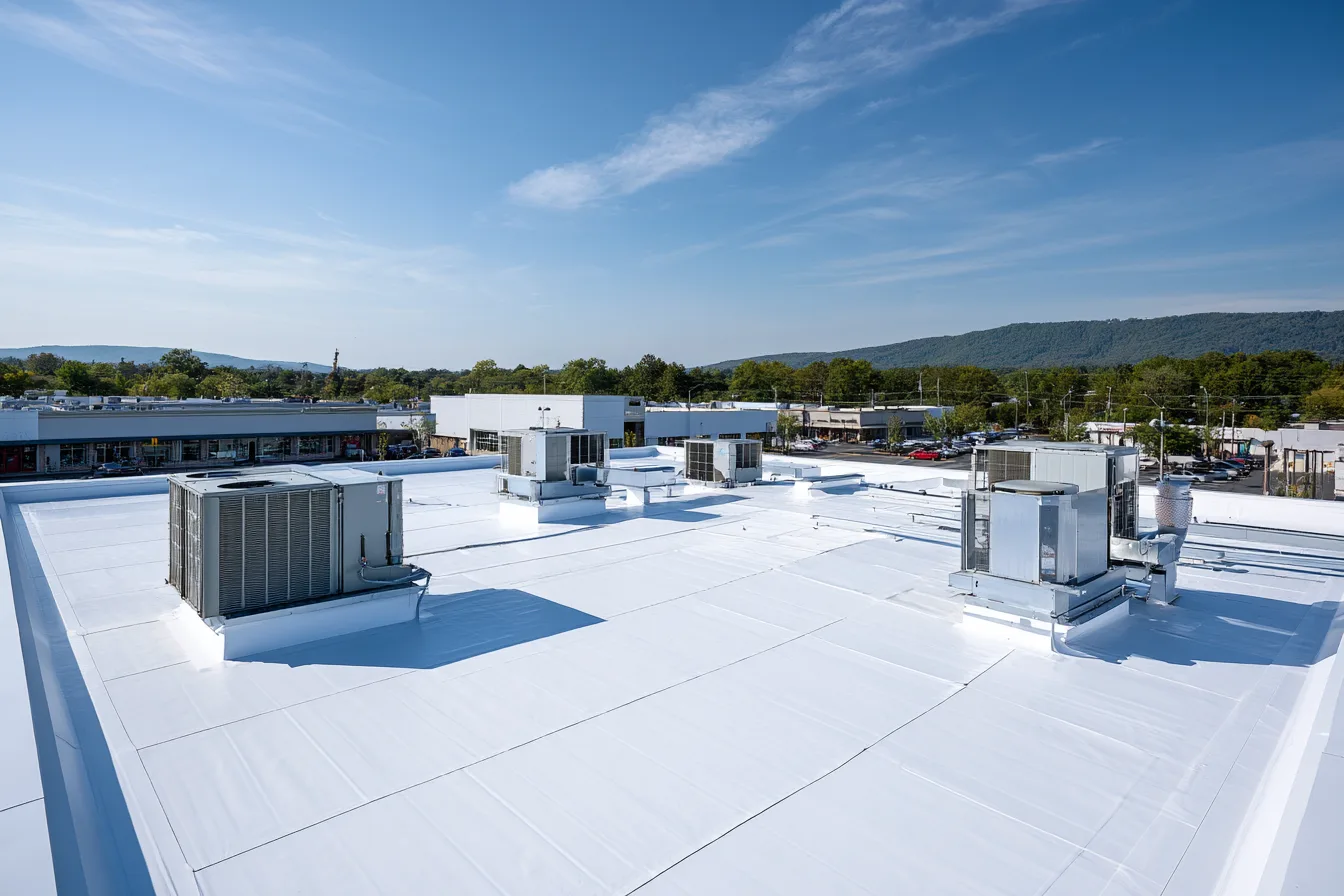
Flat Roof Repair
An active leak or a known defect on a low-slope roof, and the drainage questions that come with it.
Commercial roofing in Pryor, Oklahoma
A building roof is an operating asset with a budget line, tenants under it and equipment on top of it. Whether you're dealing with an active leak, an aging membrane or a coating proposal you're not sure about, the useful first step is the same: identify the system, find out where the water and moisture actually are, and let the findings size the work. That starts with a free roof assessment.
Commercial roofs around Pryor come in a handful of systems: single-ply membranes, coated roofs, metal panels, and older built-up assemblies. Each fails in its own places and takes its own repairs, so the first real question about any building roof is what system is actually up there. A white surface alone doesn't answer that; membrane types and coatings can look alike from a parapet.
The second question is what the roof is doing to the building. A drip over a sales floor, staining on a deck panel, or ponding that's outlasting every rain by days each points the assessment somewhere specific. From there, repair, restoration and replacement stop being sales categories and become options you can compare.
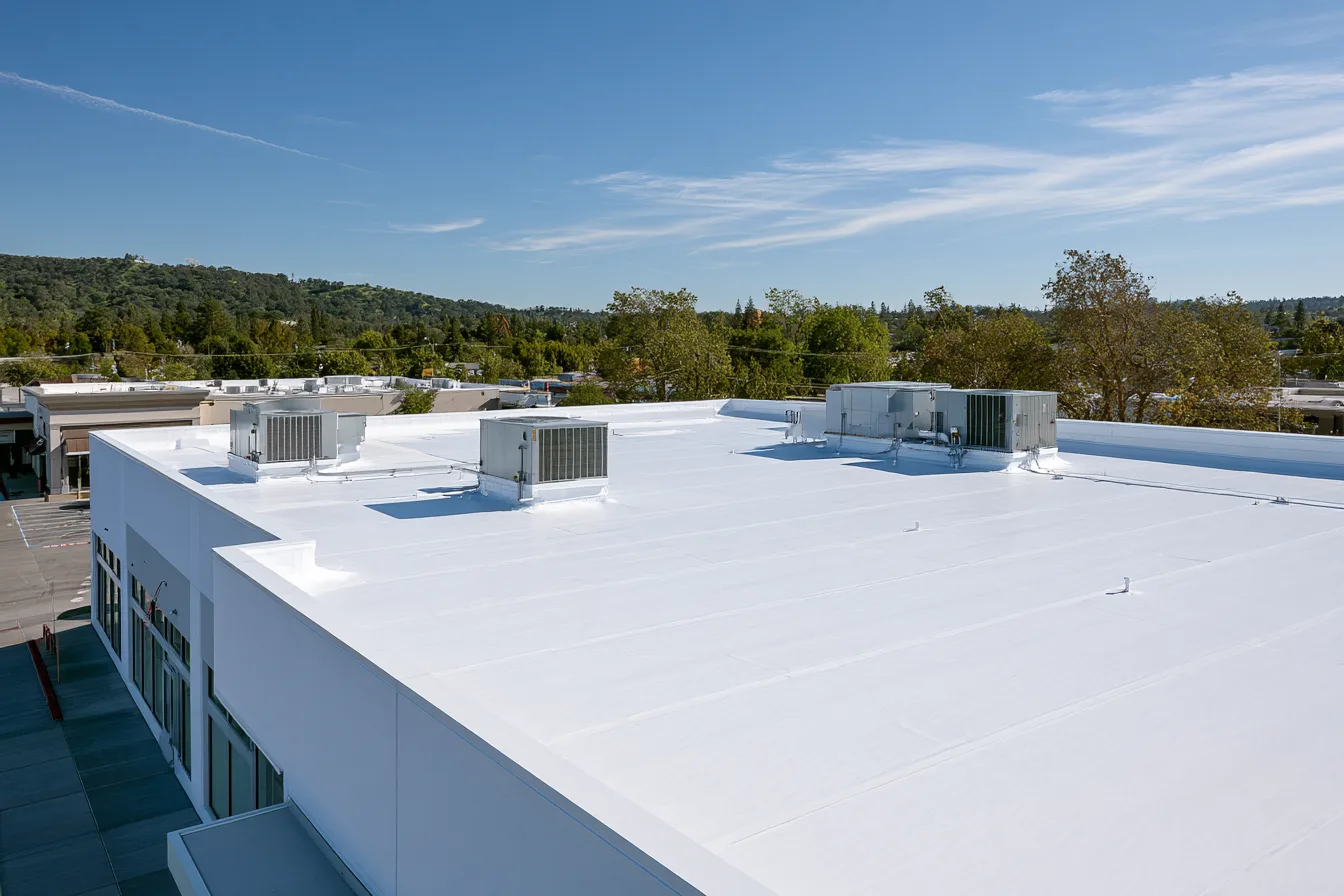
Three pages, three different decisions. Pick the one that matches where your roof actually is.
An active leak or a known defect on a low-slope roof, and the drainage questions that come with it.
Choosing, repairing or replacing a heat-welded single-ply membrane assembly.
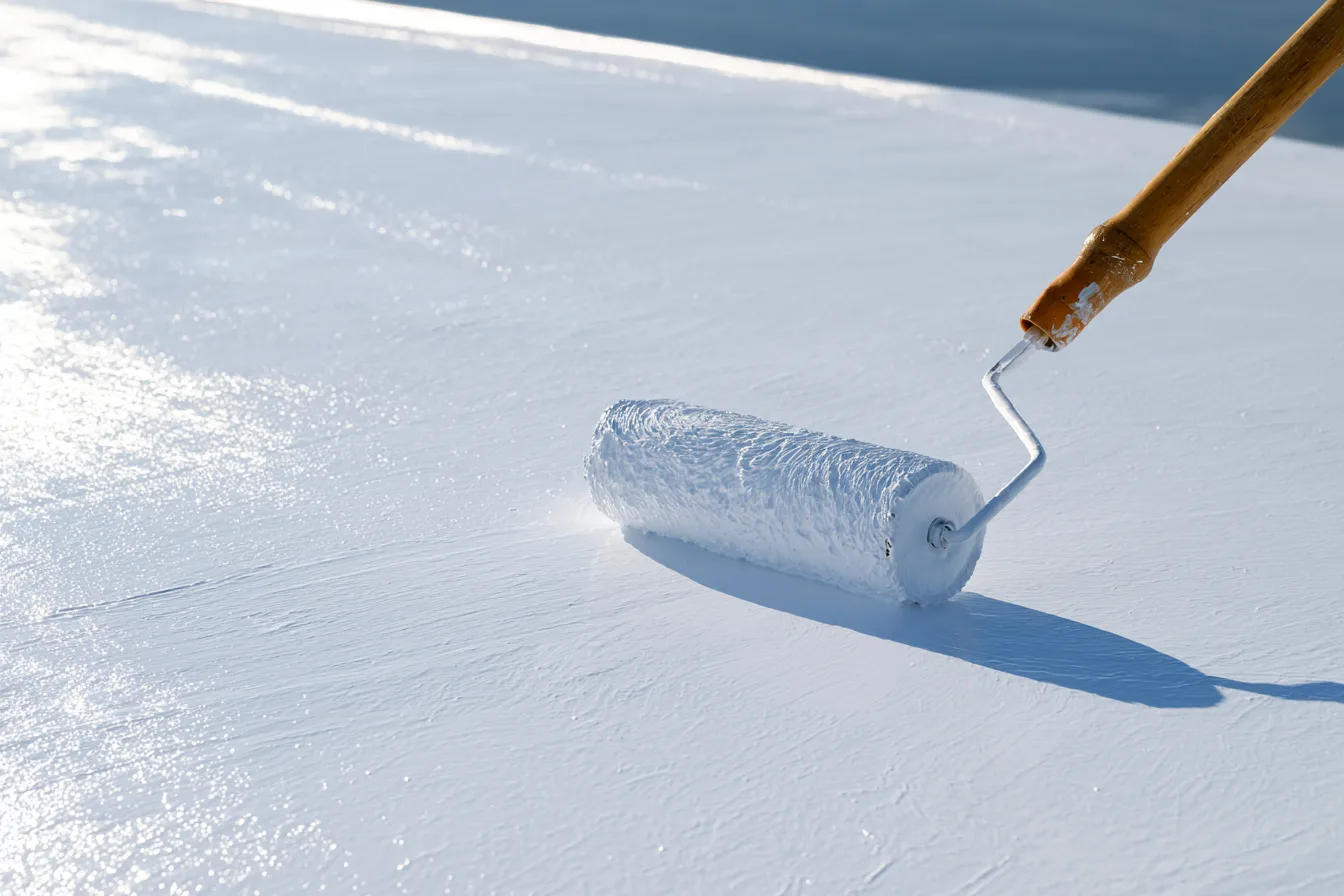
Whether your existing roof qualifies for restoration, and what real preparation involves.
On a low-slope roof, the open field is rarely the story. An assessment spends its time where the surface gets interrupted, because that's where water gets its chances.
Every joint in a membrane is a place adhesion or a weld can give up. A seam that's opened even slightly feeds water under the field, far from where it entered.
Pipes, vents, and the curbs under rooftop units interrupt the membrane and depend on flashing details. Units that get serviced regularly also get walked around, and foot traffic tells on the material.
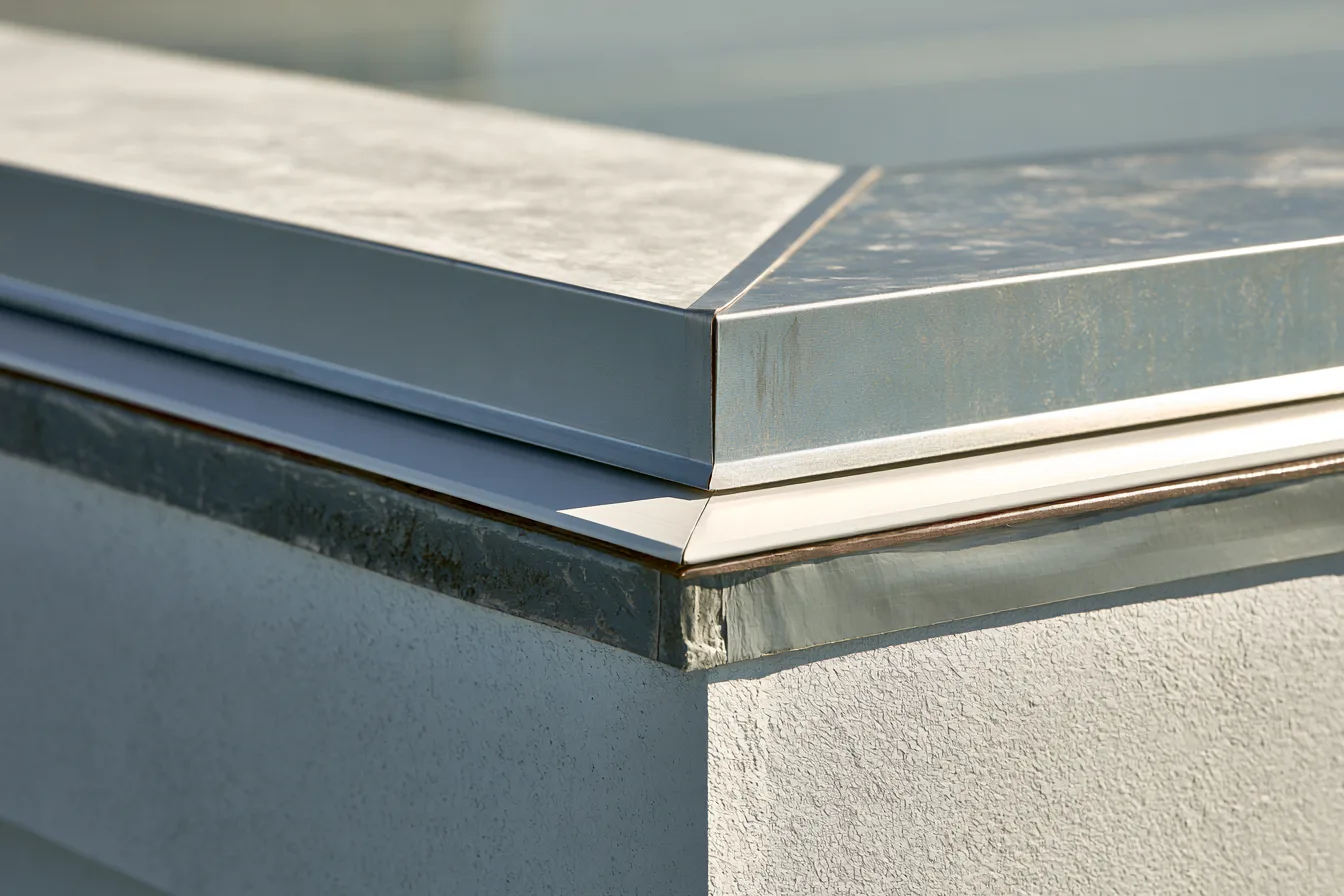
Water has to leave the roof somewhere. Blocked drains, undersized scuppers and tired edge metal all keep water on the roof longer than the assembly was designed for.
The finding that changes everything. Wet insulation under an intact-looking surface rules out coating, changes repair scope, and often explains a leak nobody could trace. It's also the difference between an honest flat roof repair and one that just moves the symptom.
Roof work on an occupied building is as much logistics as roofing. These belong in the scope from day one, not discovered on the first morning.
Where materials land, where the crew gets up, and which entrances, docks and drive lanes stay clear. A loading dock in daily use can't double as a staging area.
HVAC units, gas lines and conduit on the roof mean coordination: what can be worked around, what needs disconnecting, and which units can't go down during business hours.
Noise, odors and overhead work all land on the people inside. Sequencing the roof in sections around how the building actually operates is part of the scope, not a favor.
Open roof sections and adhesive or weld work need workable conditions. A realistic schedule builds that in instead of promising around it.
Commercial roof work has no honest flat rate. The price follows the assembly and its condition: what system is up there, how much wet material has to come out, how dense the details are, how the crew reaches the roof, and how the work has to sequence around the building's operations.
What you can expect is a scope that itemizes those drivers so the number is explainable, and an assessment first so the scope reflects the roof's actual condition rather than a guess from the parking lot.
Often, yes. A localized defect in a roof whose surrounding assembly is dry and serviceable takes a compatible repair, and that's the end of it. What tips the answer the other way is extent: saturated insulation or failures spread across the field mean a repair only relocates the problem. The flat roof repair page explains how that line gets drawn.
When the existing roof earns it: a compatible substrate, dry insulation confirmed by a moisture check, adhesion that tests out, drainage that works, and details prepared before the field gets coated. Fail any of those and coating just seals problems under a fresh surface. The roof coatings page walks through qualification step by step.
Yes. Requests for commercial and industrial buildings in and around the MidAmerica area are welcome; include the site location, the building's use and what the roof is doing. The service area pages cover the local context.
No. TPO, PVC and coated roofs can all read as a white roof from the ground, and they take different, sometimes incompatible repair materials. Identifying the actual system is one of the first jobs of the assessment, because a repair that's wrong for the membrane can fail worse than the defect it covered. The TPO page explains how that system behaves.
Whether it's a leak this week or a budget question for next year, the roof assessment is free and it starts from your building's actual condition. Send the location and the concern, and get a scope you can plan around.
Contact us